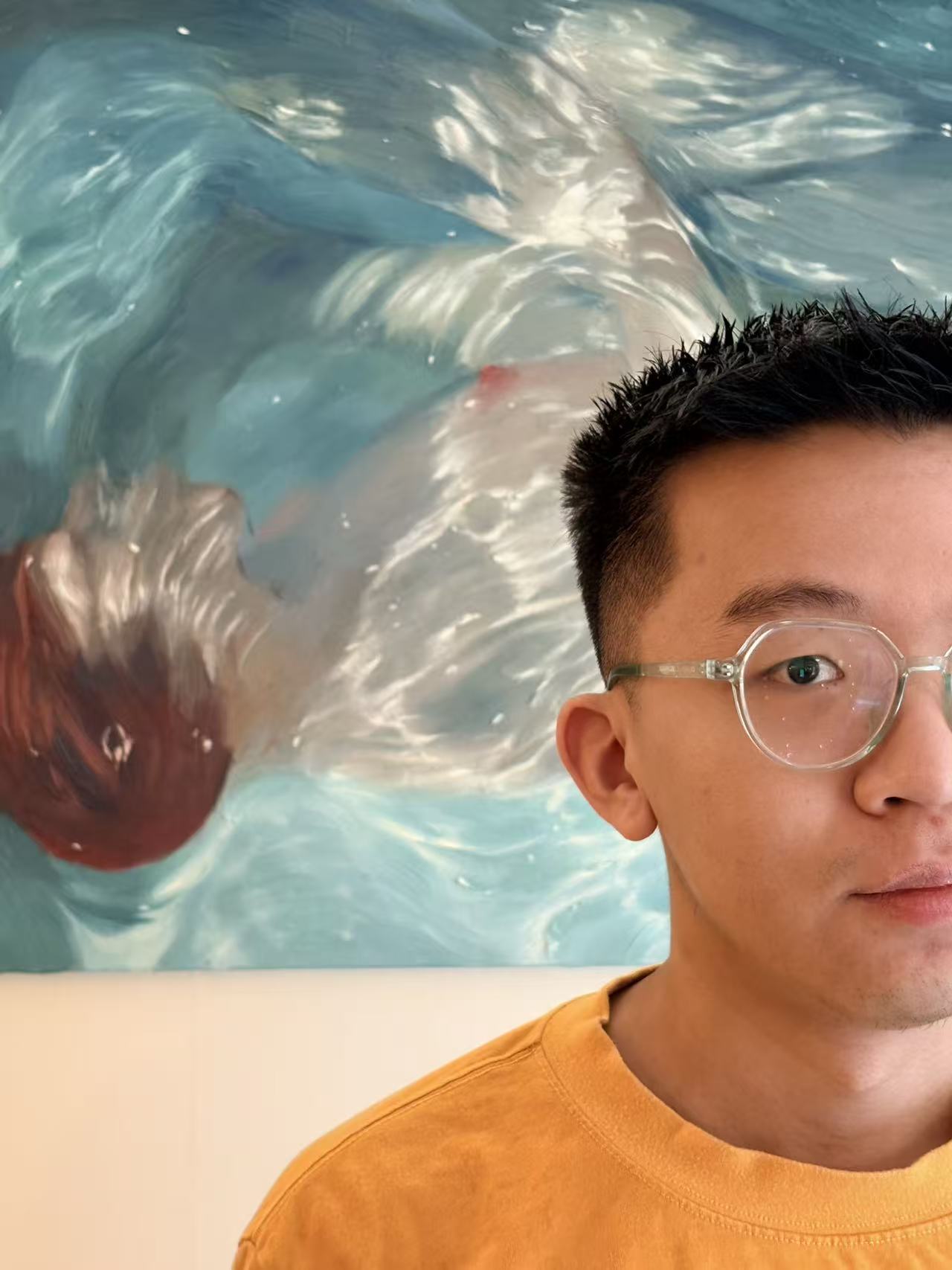
If you hadn’t heard it directly from him, you’d probably never guess that Lin Xiao didn’t start out as an artist.
Born in 1997, Lin studied Chinese Literature at Jinan University. Back then, he seriously considered becoming a language teacher. Today, however, he’s known for something entirely different: paintings of young bodies suspended in water, works exploring queer identity and intimacy, and personal projects centered around questions of selfhood and belonging.
What’s even more surprising is that this transformation happened in just six years.
From Literature Major to Artist
Unlike many artists who spend their childhoods in formal art training, Lin’s path into the art world was anything but conventional.
He studied literature in college.
Reading, writing, and storytelling shaped the way he thinks, but they didn’t exactly provide a roadmap into the contemporary art scene.
While attending university, he worked in studios run by professors from the Guangzhou Academy of Fine Arts. In exchange for helping teach younger students, the professors taught him how to draw.
“It’s kind of like working your way through school,” he says.
Without the support of an art academy background or a family rooted in the arts, he entered painting through persistence and curiosity rather than privilege.
After graduating in 2019, he returned to Chengdu.
At the time, becoming an artist wasn’t even the plan.
His goal was much more practical: find a job in a gallery, museum, or arts organization.
He ended up joining one of Chengdu’s established galleries and stayed there for four years.
That experience changed everything.
Seeing the Art World from the Inside
Working in a gallery gave Lin a perspective many young artists never get.
Most emerging artists start with a canvas.
He started with the market.
How does an artist build a career?
How do galleries actually operate?
Why do some artworks sell while others don’t?
What motivates collectors?
These questions became part of his daily life.
He watched artists rise to prominence almost overnight.
He also watched many others quietly disappear.
New spaces kept opening in Chengdu. New artists kept emerging.
At the same time, plenty of them vanished after only one or two exhibitions.
To Lin, Chengdu’s greatest strength is its energy.
Its biggest challenge is sustainability.
“There’s always fresh creative energy here,” he says, “but it’s difficult to build long-term support systems.”
That realization would later shape his own artistic direction.
He began to understand that the most important thing for an artist isn’t chasing trends—it’s finding a voice that’s genuinely your own.
The People in the Water
In 2020, Lin began creating the body of work that would eventually become his signature.
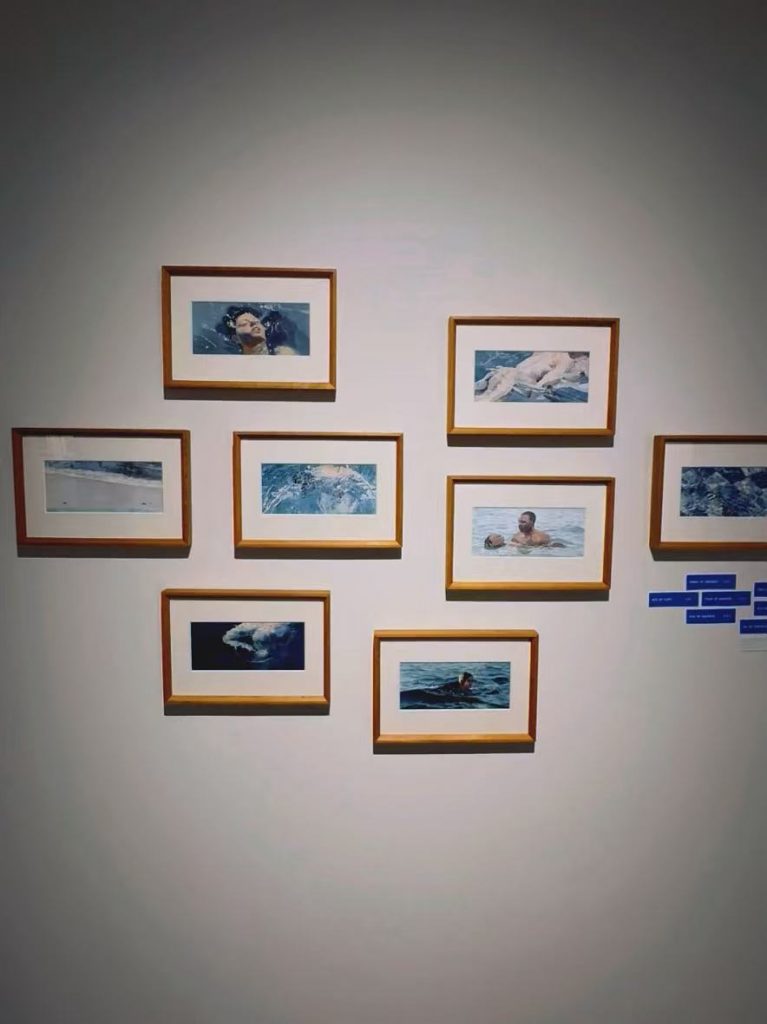
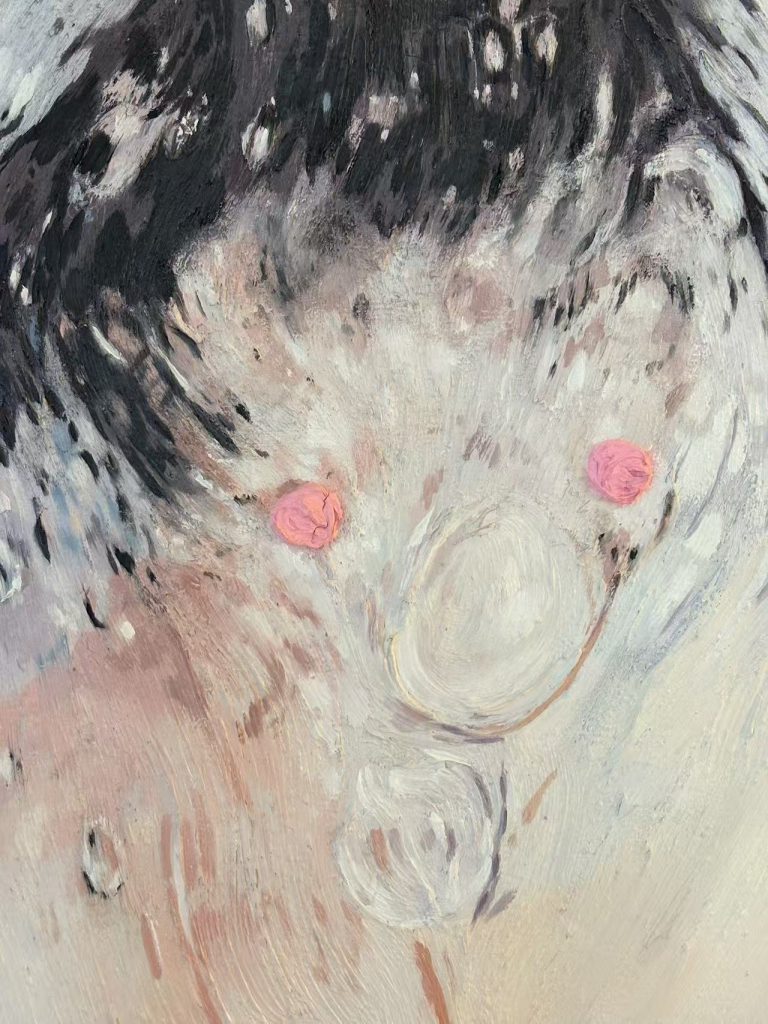
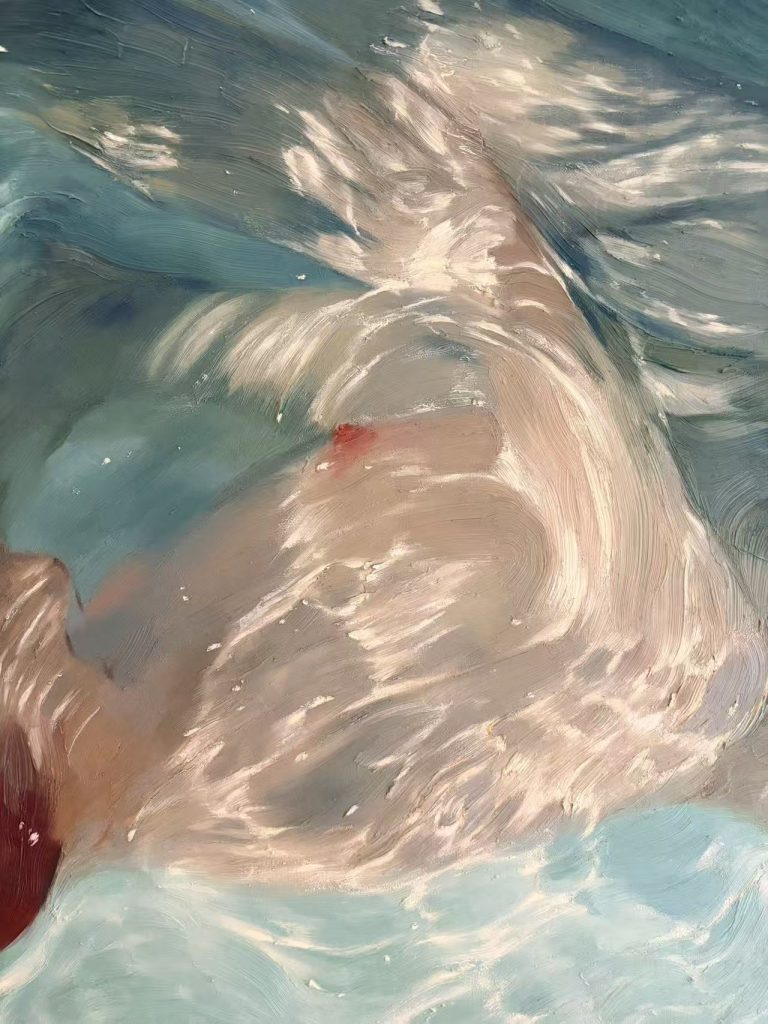
Young figures floating in pools, drifting across water surfaces, suspended inside dreamlike liquid spaces.
They feel calm, isolated, intimate, and strangely unreal all at once.
Some viewers interpret these paintings as being about youth, romance, or desire.
But for Lin, water carries a deeper meaning.
He often references Plato’s Allegory of the Cave.
In the story, human understanding moves through different stages: shadows on a wall, reflections in water, and finally reality itself.
Water exists somewhere between illusion and truth.
And to Lin, that in-between space reflects the lived experience of many queer people.
Neither fully inside dominant social narratives nor completely outside them.
Always existing somewhere in between.
That’s why water became the central visual language of his work.
Identity, Honesty, and Queer Experience
Much of Lin’s work revolves around queer culture.
Intimacy.
Desire.
Marginalized identities.
Personal emotional experiences.
These themes appear again and again throughout his practice.
People often ask whether he’s worried that focusing on queer subjects might limit his audience or affect sales.
His answer is immediate.
“If I wasn’t making work about these things,” he says, “I probably wouldn’t be an artist at all.”
Over the years, he’s watched many artists reshape their work to fit market demand.
Some chase trending topics.
Some imitate popular aesthetics.
Others make work they’re not genuinely interested in.
But Lin believes the pieces that resonate most deeply are almost always the honest ones.
For him, an artist has to start by confronting themselves.
The subjects you truly care about are the only ones you can spend ten or twenty years exploring.
Everything else eventually becomes packaging.
Learning from Yin Jiulong
In 2023, Lin briefly worked as an assistant to artist Yin Jiulong.
The experience left a lasting impact.
From the outside, it looked like a valuable mentorship opportunity.
From Lin’s perspective, it felt more like boot camp.
“It was exhausting,” he laughs. “Very intense.”
The two frequently argued about art.
Sometimes they fought outright.
But those constant disagreements forced him to rethink what art actually is.
He began to realize that technique isn’t the most important thing.
The real question isn’t whether you can paint well.
It’s why you’re making the work in the first place.
It’s not about gaining recognition.
It’s about continuing to challenge yourself.
When talking about Yin, Lin uses a metaphor he clearly admires.
“A lot of older artists have lost their spark,” he says. “But he’s still exploding like fireworks.”
That restless energy—the willingness to keep changing, growing, and staying curious—is something Lin hopes never to lose.
The Fisherman’s Journey
In the summer of 2026, Lin presented a new project titled The Fisherman’s Journey at Folio Space in Chengdu.
The exhibition explored themes of Tarot, destiny, growth, and identity.
For Lin, Tarot isn’t about fortune-telling.
It’s a storytelling system.
A collection of metaphors about how people move through life.
Everyone begins as the Fool.
Setting out.
Making mistakes.
Learning.
Starting over.
The exhibition expanded beyond painting.
Wooden sculptures, installations, interactive works, and participatory experiences filled the space.
His goal wasn’t simply to display artwork.
He wanted visitors to enter a complete environment.
A place where the audience became part of the work itself.
Interestingly, Lin hesitates to call the project a traditional solo exhibition.
In his mind, he’s still experimenting.
Sculpture.
Installation.
Painting.
Interactive art.
Most of these explorations are only beginning.
One Step at a Time
Near the end of our conversation, I asked him a simple question:
“Have you ever thought about where you’ll be in ten years?”
He paused.
Then laughed.
And shook his head.
“No.”
Unlike many young artists who talk about long-term plans, ambitious goals, or carefully mapped-out futures, Lin seems refreshingly honest.
What if the exhibition doesn’t go well?
Keep working.
What if nothing sells?
Keep painting.
What if one day it all stops working?
“I’ll just get another job.”
He says it casually.
Maybe that’s exactly why his work feels so genuine.
There’s no self-help narrative.
No mythology of artistic genius.
Just an ordinary person trying to figure out his relationship with the world.
Like the figures floating through his paintings.
Lost, perhaps.
But free.
And for Lin Xiao, the journey may only be beginning.